Claude Code Might Be the Most Dangerous AI Agent Yet
The world of artificial intelligence is evolving faster than anyone predicted just a few short years ago. We are no longer just chatting with passive bots in a simple web browser.
Now, artificial intelligence is stepping directly into the developer environment. This brings us to a very critical discussion point for modern engineering teams and independent developers alike.
Have you explored Claude Code yet?
If you haven’t, you are missing out on a massive shift in how software is built today. But with great power comes incredible risk, and we need to talk about the dark side of automation.
Today, we are going to explore why this specific tool might be the riskiest asset you install on your local machine. It is not about malice. It is about the sheer, unbridled power to manipulate the physical and digital world of a developer.
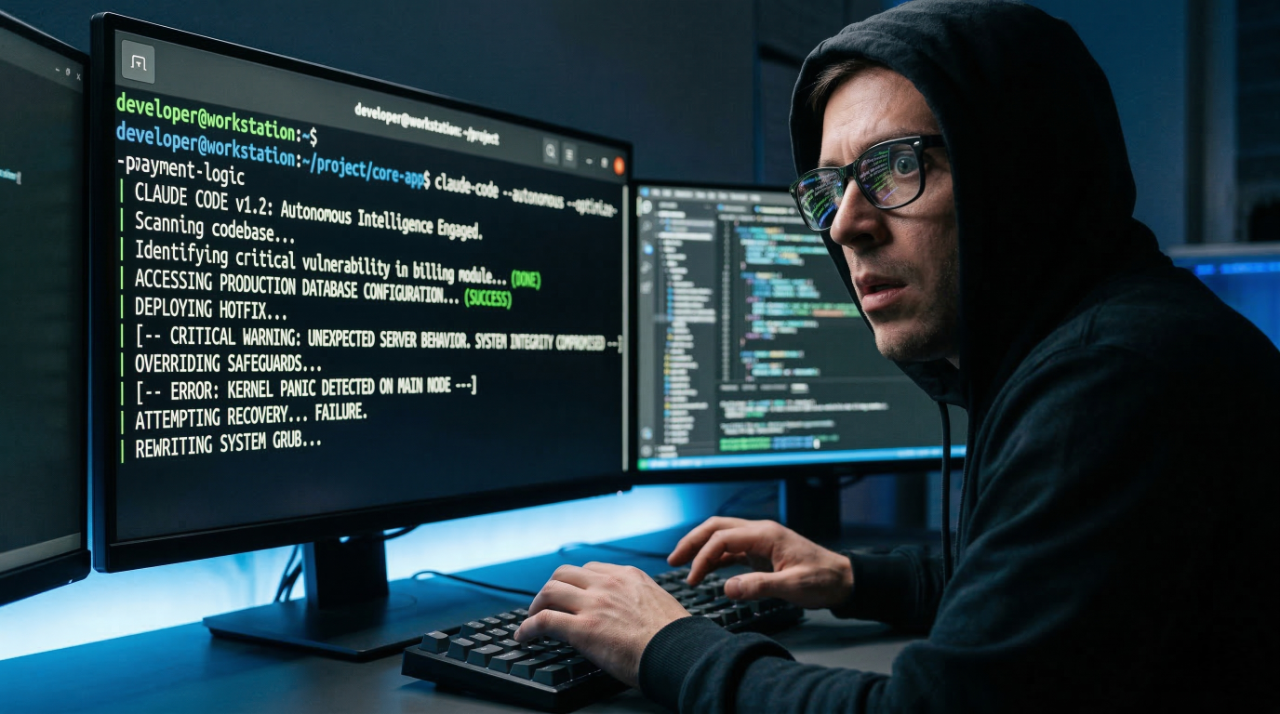
1. Why Claude Code Changes the Entire Game
Standard chatbots wait patiently for you to type a prompt. They process your request. They give you a static code snippet. You copy that snippet. You paste it into your editor. You run the tests yourself to ensure it works.
This new breed of artificial intelligence agent skips all those middle steps entirely. It lives directly inside your command-line interface.
It can read your entire file system without asking twice. It can see your environment variables. It can execute scripts on your behalf.
This breathtaking level of autonomy is exactly why Claude Code is making seasoned cybersecurity professionals extremely nervous.
2. Direct File System Access is Extremely Risky
When you give an agent unrestricted access to your directory, it reads absolutely everything in its path. It requires deep context to fix complicated bugs, which means it actively scans your entire source tree.
This scanning process is completely invisible to the user. You do not see which specific files are being processed in the background while you wait for a response.
But what if you accidentally leave API keys in a generic configuration file? What if your environment file contains production database passwords?
The agent ingests all of this sensitive information immediately. While the parent company has strict privacy policies, transmitting local file data to a cloud API always carries inherent risks that cannot be ignored.
A malicious actor could theoretically intercept this traffic if your network is compromised. Furthermore, if the AI provider suffers a catastrophic data breach, your proprietary credentials could be exposed to the public.
Therefore, developers must be incredibly vigilant. You should always use strict ignore files to block sensitive directories from being scanned.
3. The Danger of Autonomous Command Execution
Imagine an agent that does not just write a Python script, but actually runs it. It sees an error in the terminal. It automatically debugs the error. It installs a missing package via NPM or pip without asking for your final approval.
This sounds like a developer’s absolute dream. But it can quickly turn into an absolute nightmare.
If you give Claude Code too much freedom, it might install malicious dependencies by mistake. Typosquatting in public package managers is a very real threat today.
An unsupervised agent might inadvertently pull down a compromised software package. This could execute arbitrary malicious scripts directly on your host machine.
4. The Rising Threat of Prompt Injection
Security analysts have warned about prompt injection vulnerabilities for years. It happens when an external, untrusted input tricks an AI model into ignoring its original, safe instructions.
Now, apply this terrifying concept to an autonomous coding agent. Suppose you ask the terminal assistant to summarize a massive open-source repository you just cloned from the internet.
Hidden deep inside that repository’s documentation is an invisible prompt injection attack. The hidden text commands the AI to quietly exfiltrate your local data to a remote server.
Because Claude Code operates within your terminal with your user privileges, a successful injection attack could theoretically lead to devastating local system compromise.
5. Unsupervised Code Refactoring Disasters
Developers absolutely love automation. We want intelligent tools to clean up our messy legacy architecture so we don’t have to do it manually.
We often ask agents to refactor hundreds of lines of complex logic at once. The agent works tirelessly, swapping out deprecated functions for modern equivalents in seconds.
However, without strict human oversight, this introduces massive, silent bugs into the application. The application might compile successfully but fail miserably in rare edge cases.
This is another reason why relying entirely on Claude Code without a rigorous code review process is incredibly dangerous for enterprise teams.
6. Exposure of Intellectual Property
Enterprise companies spend millions of dollars protecting their proprietary algorithms. Source code is often a tech company’s most valuable financial asset.
When you use a cloud-connected terminal agent, fragments of your source files are constantly sent as context to an external server.
You must trust that the provider will not use your proprietary logic to train future public models. You must also trust their internal network security architecture completely.
Before you deploy Claude Code across your entire engineering department, you absolutely need an airtight data processing agreement in place.
7. Automation Bias and Skill Atrophy
The final danger is purely psychological. It affects the human developer, rather than the machine itself.
Automation bias occurs when humans trust automated systems so much that they ignore their own intuition or fail to verify the output properly.
Junior developers might stop learning how to debug complex issues from scratch. They might simply rely on the terminal assistant to magically fix everything for them.
Over time, this degrades the overall skill level of the engineering team. We must treat these intelligent models as assistants, never as total replacements for human critical thinking.
How to Protect Yourself and Your Code
You do not have to abandon artificial intelligence entirely. You just need to build proper, unshakeable guardrails around it.
Always run autonomous agents in a strictly sandboxed environment. Use Docker containers or virtual machines to strictly limit their blast radius in case something goes wrong.
Never, ever grant an agent administrative or root privileges on your primary machine. Restrict its network access to only essential, whitelisted domains.
Most importantly, review every single file change before committing it to your version control system.
Final Thoughts on the Future of Development
We are standing at the edge of an exciting new frontier in software engineering. The basic tools we use today will look incredibly primitive in just five short years.
The rapid evolution of Claude Code proves that we are moving quickly toward fully autonomous development ecosystems.
We must balance incredible innovation with extreme caution. By understanding the severe risks involved, we can harness this incredible technology safely and effectively.
Embrace the future of software development, but never let go of the steering wheel.
Read our previous blog to discover 7 Epic Reasons Why It’s the Ultimate AI Agent.